From Safiya Sinclair’s Cannibal
The Caucasian skull is large and oval, with well-proportioned features. The
nasal bones are arched, the chin full, the teeth vertical. This race is distinguished
for the facility with which it attains the highest intellectual endowments.
Lusus Naturae
noun (rare)
A freak of nature.
Black body burns itself
to bushfire—
spurned husk that I am. Skinned viscous,
daughtering fever. Grief knifes its slow lava
through my fluorescent
Full poem here: https://lemonhound.com/2017/10/05/safiya-sinclair-from-cannibal/
Safiya Sinclair’s “Crania Americana”, from her larger work Cannibal, takes the form of a poem that her Caliban character delivers, but what particularly distinguishes this poem is how angry Caliban is throughout it. This Caliban demands to be heard loudly and clearly, reminiscent of Aime Cesaire’s Caliban.
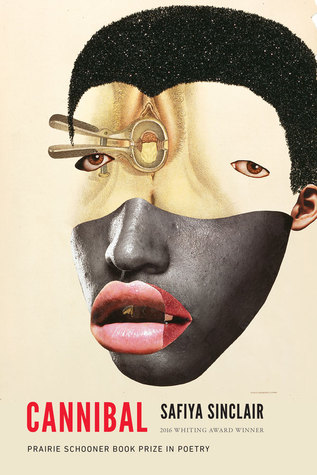
Sinclair clearly critiques colonialism through her (feminized) Caliban avatar. At first, Sinclair’s Caliban begins with a sarcastic opening on the aesthetic and intelligence of the white race, whose entire appearance is remarkably different from the black person on the cover of Sinclair’s novel. Perhaps the book cover character is a representation of Caliban, a symbol of a black man who has been perceived as other or savage because his features (and therefore “intellectual endowments”) are everything that a Caucasian’s is not. The next line speaks to this, as the black body burns and is considered a “spurned husk.”
The implication of physical description affecting intellectual capability correlates well with Shakespeare’s Caliban, who had to be taught how to speak by Prospero and Miranda, and is also given some of the most visually jarring descriptions (the “half fish, half monster” one also appears in the “Crania Americana” poem).
And yet, like Shakespeare’s Caliban, Sinclair’s challenges those very perceptions that others have on him (her) through intricate words of poetry. And as Sinclair’s Caliban angrily roars against colonial assumptions and expectations, I am reminded of Caliban in The Tempest when he says: “You taught me language, and my profit on ’t/Is I know how to curse” (I.II.368).
 Poetry of Caliban